
Supreme Court on Banking and Corporate Disputes: Key Legal Issues in Financial Litigation
Banking and corporate disputes are an important part of India’s legal and financial landscape. As businesses increasingly depend on institutional lending, corporate guarantees, investment agreements, securities and regulatory frameworks, disagreements between banks, companies, investors and financial institutions can lead to complex litigation. These disputes often involve questions of contractual obligations, regulatory authority, investor protection, corporate governance and the interpretation of financial laws.
The Supreme Court of India plays a significant role in clarifying these legal issues. Its judgments help establish how statutory powers must be exercised, how financial agreements should be interpreted and how the rights of investors and other stakeholders should be protected.
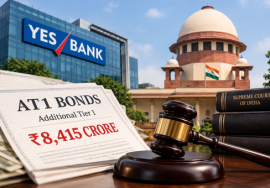
A notable recent development is the Supreme Court’s judgment in Yes Bank Ltd. v. Axis Trustee Services Ltd. & Others, decided on 15 October 2026. The case concerned the write-down of Additional Tier 1 (AT-1) bonds during Yes Bank’s reconstruction in 2020. The Court dismissed the appeals challenging the Bombay High Court’s decision, which had set aside the write-down.
The judgment highlights important questions about regulatory authority, banking supervision, financial instruments and compliance with the applicable legal framework. It also provides a useful starting point for understanding the broader issues involved in banking and corporate disputes in India.
1. Understanding Banking and Corporate Disputes
Banking and corporate disputes arise when financial institutions, companies, investors or other stakeholders disagree over their legal rights and obligations. These disputes may concern loan defaults, security interests, corporate guarantees, debt recovery, insolvency proceedings, securities transactions or alleged violations of regulatory requirements.
Common examples include:
- Disputes over loan repayment, interest and contractual terms.
- Enforcement of corporate guarantees and secured assets.
- Conflicts between lenders, borrowers and guarantors.
- Challenges to banking or regulatory decisions.
- Disputes involving bonds, debentures and other financial instruments.
- Corporate insolvency and creditor claims.
- Allegations of fraud, misrepresentation or inadequate financial disclosures.
The appropriate legal remedy depends on the nature of the dispute, the governing agreement, the applicable legislation and the relief sought. Some matters may proceed before civil courts, while others fall within the jurisdiction of specialised forums such as the Debt Recovery Tribunal (DRT), the National Company Law Tribunal (NCLT), the National Company Law Appellate Tribunal (NCLAT) or the relevant High Court.
The Supreme Court may become involved through appeals or other proceedings permitted by law.
2. The Supreme Court’s Judgment in the Yes Bank AT-1 Bond Dispute
The decision in Yes Bank Ltd. v. Axis Trustee Services Ltd. & Others is an important example of litigation involving banking regulation and investor rights.
Background of the dispute
In March 2020, Yes Bank underwent a reconstruction process after serious deterioration in its financial position. The restructuring took place under the Banking Regulation Act, 1949.
The dispute concerned Additional Tier 1 bonds, commonly known as AT-1 bonds. These instruments are designed to help banks meet regulatory capital requirements and may carry significant risks, including the possibility of losing their investment under specified circumstances.
During the reconstruction process, Yes Bank’s administrator announced that outstanding AT-1 bonds had been written down. The decision was challenged by Axis Trustee Services Limited, acting on behalf of bondholders, along with other affected parties.
The Bombay High Court set aside the write-down in January 2023. The matter subsequently reached the Supreme Court.
What did the Supreme Court decide?
On 15 October 2026, the Supreme Court dismissed the appeals filed against the Bombay High Court’s decision. It examined whether the administrator possessed the legal authority to write down the bonds under the final reconstruction scheme and the applicable regulatory framework.
The Court concluded that the administrator could not exercise a power that had not been specifically conferred under the final scheme. The judgment also examined the significance of the omission of a proposed write-down provision from the notified reconstruction scheme.
The decision demonstrates that the financial difficulties of a bank do not automatically authorise its management or administrator to take actions beyond the powers granted by law.
3. Regulatory Authority and Compliance with Banking Laws
One of the central issues in banking litigation is whether a financial institution or its appointed administrator has acted within the scope of its statutory authority.
The Banking Regulation Act, 1949, provides a legal framework for banking regulation, supervision and certain reconstruction measures. Depending on the circumstances, the Reserve Bank of India (RBI), the Central Government, a bank’s board or an appointed administrator may have specific responsibilities.
However, these roles are not interchangeable. A power assigned to a particular statutory authority cannot automatically be assumed by another person or institution.
The Yes Bank judgment illustrates why the exact wording of a reconstruction scheme and the relevant regulatory provisions matter. An administrator appointed to manage a bank does not necessarily possess every regulatory power available to the RBI.
For companies and financial institutions, this principle has practical implications. Decisions concerning financial instruments, capital restructuring and investor claims should be supported by clear legal authority and must comply with applicable regulatory requirements.
Where a decision exceeds the powers granted under the relevant framework, it may become vulnerable to judicial review.
4. Investor Protection and Financial Risk Disclosure
Investor protection is another important consideration in banking and corporate disputes.
Financial instruments such as AT-1 bonds may offer returns to investors, but they can also expose investors to substantial risks. Their terms may permit loss absorption or other consequences in circumstances defined by the governing documentation and regulatory framework.
Investors therefore need to understand the instrument before committing funds. Relevant considerations include the terms of issue, the risk factors disclosed, the conditions governing repayment or write-down, and the legal rights available to bondholders.
The Yes Bank dispute brought these issues into focus. The Supreme Court examined the circumstances in which the bonds were dealt with during the bank’s reconstruction and emphasised the importance of compliance with the applicable framework.
For businesses and financial institutions, the case underlines the importance of accurate disclosures, transparent financial practices and careful documentation. Investors who believe that their contractual or statutory rights have been violated may need to examine the transaction documents and obtain appropriate legal advice.
However, the outcome of any investor dispute depends on the specific instrument, the applicable regulations and the facts of the case.
5. Contractual Obligations and Corporate Guarantees
Corporate guarantees and financial agreements are common sources of banking disputes. A corporate guarantee may be provided when a company secures borrowing undertaken by another business or group entity.
If the borrower defaults, the lender may seek to enforce the guarantee according to its terms and the applicable law. Disputes may arise over the scope of the guarantee, the circumstances in which liability becomes enforceable, compliance with contractual conditions or the extent of the guarantor’s obligations.
Courts and tribunals generally examine the language of the agreement, the parties’ obligations and the relevant statutory provisions when determining such issues.
Businesses should therefore ensure that loan agreements, security documents and guarantees are properly drafted and reviewed. Companies should also maintain records of approvals, amendments, payment obligations and communications with lenders.
When a dispute arises, an early review of the documents can help identify the relevant legal issues and determine whether negotiation, mediation, arbitration or court proceedings may be appropriate.
6. Corporate Insolvency and Debt Recovery
Corporate insolvency is another major area of financial litigation in India. When a company defaults on its financial obligations, creditors may consider remedies under the Insolvency and Bankruptcy Code, 2016 (IBC), where its statutory requirements are satisfied.
The IBC provides a framework for corporate insolvency resolution and liquidation. Depending on the circumstances, proceedings may involve financial creditors, operational creditors, corporate debtors, personal or corporate guarantors and insolvency professionals.
Disputes may concern the existence of a financial debt, the occurrence of default, limitation, the validity of a guarantee or the interpretation of insolvency-related provisions.
The NCLT generally adjudicates corporate insolvency applications at the first instance, with appeals available to the NCLAT and, where permitted, further proceedings before the Supreme Court.
It is important to distinguish insolvency proceedings from ordinary debt recovery. The legal objective, jurisdiction and requirements may differ depending on the remedy pursued.
Companies facing financial distress should obtain advice promptly, as statutory timelines and procedural requirements can affect the available options.
7. The Role of Evidence and Financial Documentation
Banking and corporate disputes frequently involve extensive documentary evidence. Courts and tribunals may need to examine loan agreements, account statements, board resolutions, regulatory correspondence, bond information memoranda, financial records and communications between the parties.
The quality and consistency of these records can significantly affect how a dispute is assessed.
Businesses should maintain accurate financial statements, properly authorised agreements, records of regulatory compliance and clear documentation of important decisions. Financial institutions should also ensure that material decisions are supported by appropriate approvals and legal authority.
In litigation, parties should identify the documents relevant to their claims and defences, preserve original records and comply with applicable procedural and evidentiary requirements.
Incomplete documentation can make it more difficult to establish contractual rights, demonstrate compliance or challenge an allegedly unlawful decision.
8. Choosing the Appropriate Legal Remedy
Not every banking or corporate dispute requires the same legal approach. The appropriate forum and remedy depend on the nature of the claim and the governing law.
Depending on the facts, available routes may include:
- Negotiation: Suitable where parties can resolve the disagreement through commercial discussions.
- Mediation: May help parties reach a mutually acceptable settlement.
- Arbitration: Available where a valid arbitration agreement covers the dispute and the matter is legally arbitrable.
- Debt recovery proceedings: May be appropriate for qualifying claims before the competent forum.
- Insolvency proceedings: May be available where the statutory requirements of the IBC are met.
- Civil or constitutional remedies: May be relevant where the dispute concerns contractual rights, statutory powers or legally reviewable public action.
- Appellate proceedings: May be available against decisions of courts or tribunals, subject to jurisdictional and procedural requirements.
A party should not assume that an appeal to the Supreme Court is available automatically. Appeals, special leave petitions and other proceedings are governed by specific legal requirements.
Obtaining legal advice at an early stage can help identify the correct forum, applicable limitation periods, available remedies and potential risks.
9. How Businesses Can Reduce the Risk of Financial Litigation
Although disputes cannot always be avoided, businesses can take practical measures to reduce legal exposure.
Review financial agreements carefully. Loan documents, guarantees, investment agreements and security arrangements should clearly define the parties’ rights and obligations.
Maintain regulatory compliance. Companies and financial institutions should monitor relevant statutory requirements, regulatory directions and reporting obligations.
Assess investment risks. Investors should examine the risk disclosures and contractual terms of financial products before investing.
Document corporate decisions. Board approvals, delegated authority and material financial decisions should be recorded accurately.
Address defaults promptly. Early communication with lenders and creditors may help identify restructuring or settlement options before a dispute escalates.
Seek specialised legal advice. Complex financial transactions may involve overlapping contractual, corporate, insolvency and regulatory issues. Timely advice can help businesses make informed decisions.
These steps cannot eliminate every dispute, but they can improve legal preparedness and support more effective dispute resolution.
Conclusion
Banking and corporate disputes require careful consideration of contractual obligations, statutory powers, regulatory requirements and the rights of affected stakeholders. The Supreme Court’s decision in Yes Bank Ltd. v. Axis Trustee Services Ltd. & Others highlights the importance of acting within the authority granted by law and following the applicable regulatory framework when dealing with financial instruments.
For businesses, lenders and investors, the judgment reinforces the value of transparent documentation, regulatory compliance and a clear understanding of financial risks. When a dispute arises, identifying the correct legal remedy and seeking timely professional advice can help protect legitimate interests and support effective resolution.
Jaswant Katariya & Associates can use this legal topic to inform readers about the complexities of banking and corporate litigation in India. The specific legal strategy in any matter should be determined after reviewing the relevant documents, facts and applicable law.
Frequently Asked Questions (FAQs)
1. What are banking and corporate disputes?
Banking and corporate disputes are legal disagreements involving banks, companies, borrowers, creditors, investors or other financial stakeholders. They may concern loan defaults, guarantees, financial instruments, debt recovery, insolvency or regulatory compliance.
2. What was the Supreme Court’s decision in the Yes Bank AT-1 bond case?
On 15 October 2026, the Supreme Court dismissed the appeals challenging the Bombay High Court’s decision to set aside the write-down of Yes Bank’s AT-1 bonds. The Court held that the administrator lacked the required authority under the final reconstruction scheme and applicable regulatory framework.
3. Which laws are relevant to banking and corporate litigation in India?
Depending on the dispute, relevant legislation may include the Banking Regulation Act, 1949, the Companies Act, 2013, the Insolvency and Bankruptcy Code, 2016, the Recovery of Debts and Bankruptcy Act, 1993, and applicable securities laws and contractual provisions.
4. Where can banking disputes be filed?
The appropriate forum depends on the nature of the dispute, the amount involved, the applicable statute, the parties and the relief sought. Depending on the matter, proceedings may be brought before a civil court, DRT, NCLT, NCLAT, High Court or another competent forum.
5. When should a business consult a banking and corporate lawyer?
A business should consider legal advice when negotiating significant financial agreements, responding to a loan default, facing insolvency proceedings, challenging a regulatory decision or dealing with a dispute involving investors, creditors or corporate guarantees.